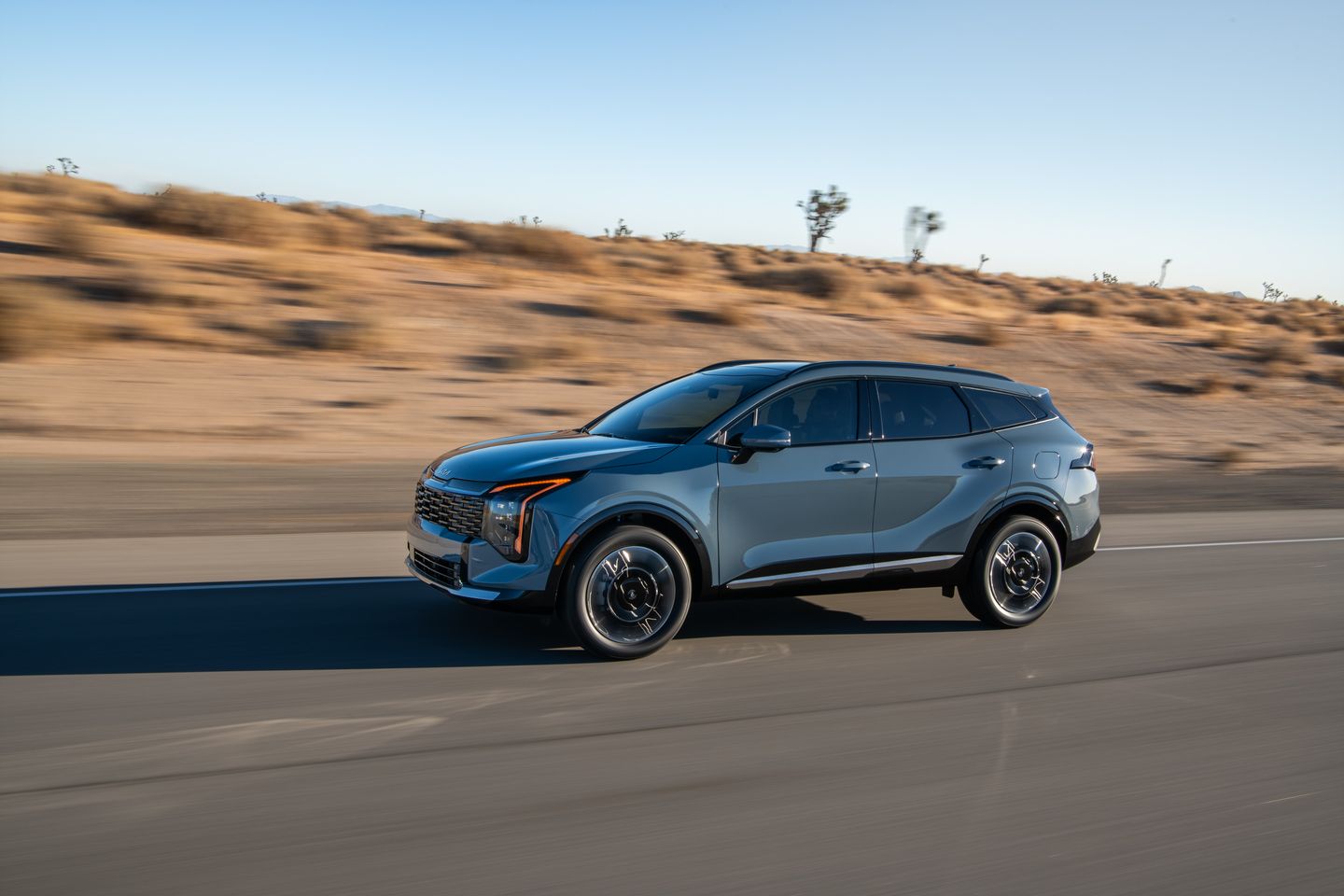
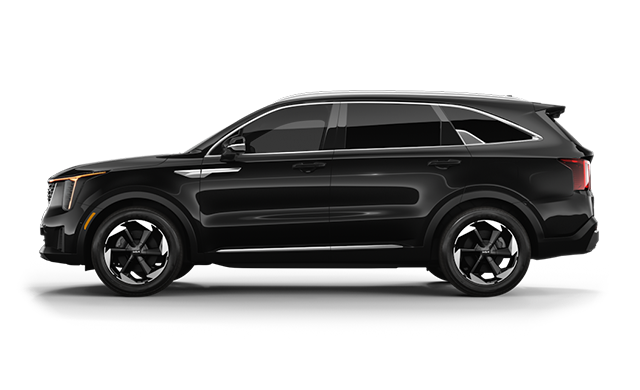
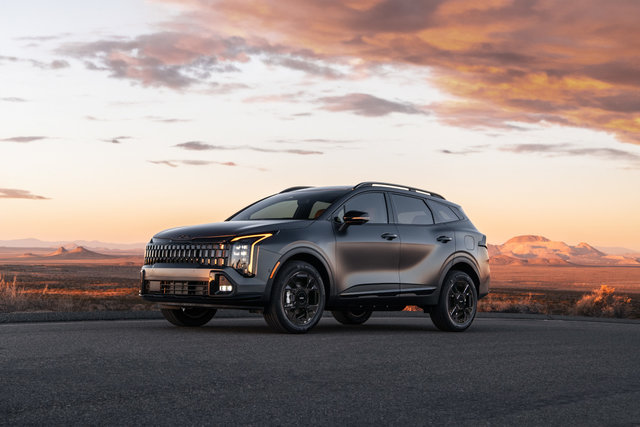
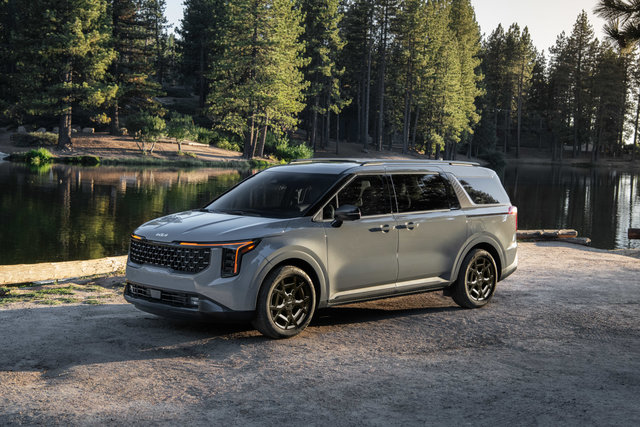
Shopping Kia's hybrid lineup often comes down to one question: how much space do you actually need? The Sportage HEV and Sorento HEV share the same hybrid heart — the same 1.6-litre turbocharged engine, the same AWD system, the same fuel-saving philosophy — but they're built for different families. Understanding what sets them apart makes choosing between them straightforward.
Start with what surprises most people: the Sportage HEV is actually the more powerful of the two. It produces 232 hp and 271 lb-ft of torque, compared to the Sorento HEV's 227 hp and 258 lb-ft. The reason is simple physics — the same hybrid system moving a lighter platform pulls harder and responds more crisply. In daily driving around the GTA, that shows up as a more immediate feel off the line and on highway on-ramps.
The Sportage HEV also edges ahead on fuel economy for the same reason, returning 6.7 L/100 km combined versus the Sorento HEV's 7.0 L/100 km. Neither number is dramatic, but if you're covering 20,000 km a year in mixed Ontario driving, the Sportage HEV is the slightly more efficient choice.
What the Sorento HEV Gives You That the Sportage Can't
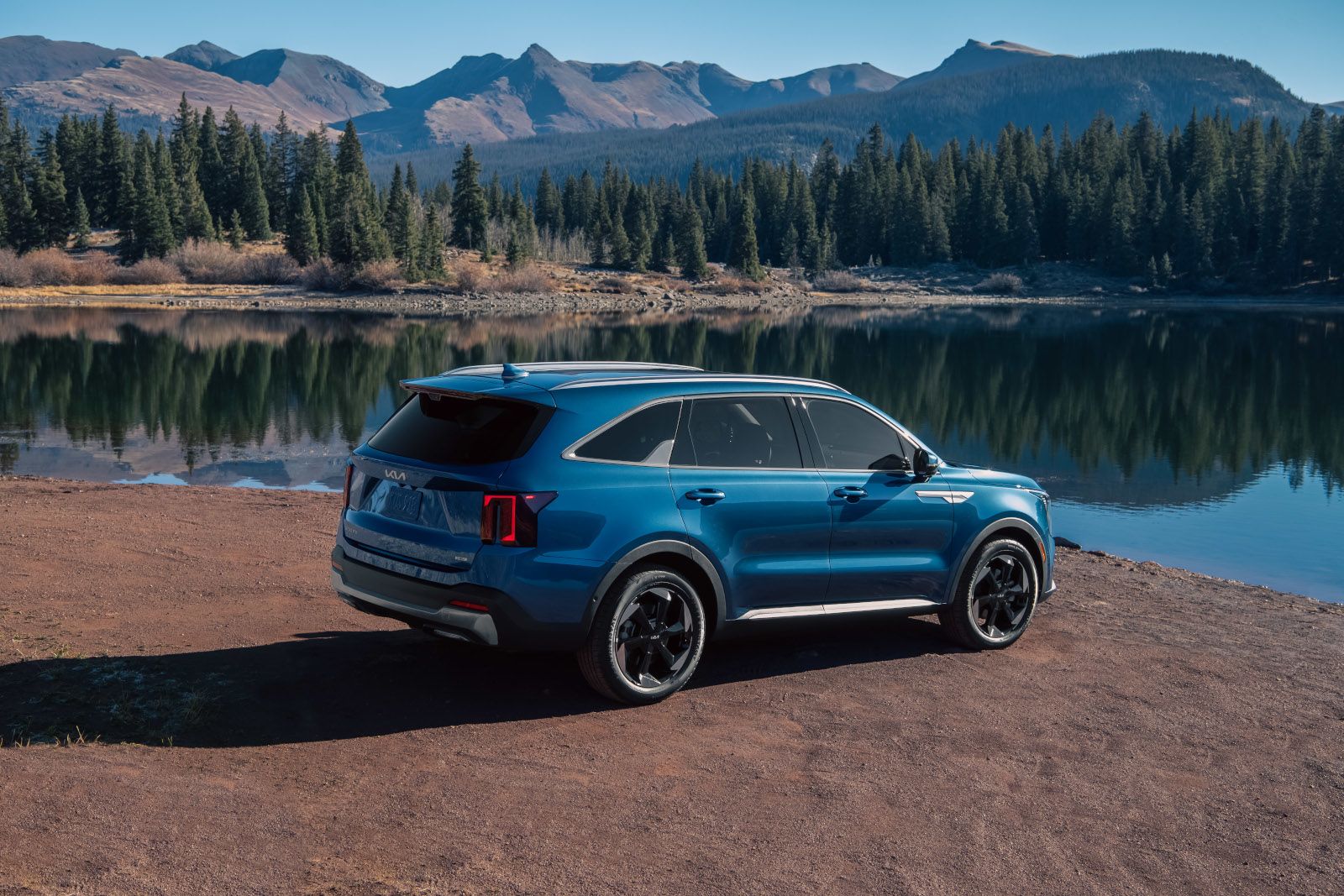
If the Sportage HEV has the performance and efficiency edge, why would anyone choose the Sorento HEV? Space — and specifically, people-carrying capacity.
The Sorento HEV offers three-row seating and a maximum cargo volume of 2,139 litres. The Sportage HEV tops out at 2,087 litres with both rows folded, and seats five. For a family of four hauling hockey bags and camping gear, the Sportage HEV handles the job comfortably. For a family of six, or anyone who regularly needs that third row, the Sorento HEV is simply the right tool.
Both vehicles tow up to 907 kg (2,000 lbs) at their respective maximums — enough for a jet ski or a light trailer — so that's not a deciding factor between them.
The Sorento HEV's higher trims also offer a more advanced driver assistance suite, including Highway Drive Assist 2 and Lane Following Assist 2. If semi-autonomous highway driving is something you'd actually use on your commute, that's worth factoring in when you're comparing trim levels side by side.
How to Think About the Price Difference
The Sportage HEV starts at $41,245 for the EX HEV trim. The EX Premium HEV ($44,245) adds heated steering, synthetic leather, wireless charging, and a power liftgate — a meaningful upgrade for families who spend a lot of time in the vehicle. The SX HEV ($47,745) brings a panoramic sunroof.
The Sorento HEV's pricing sits above the Sportage HEV's entry point, reflecting the additional seating and cargo capacity. If your family doesn't genuinely need the third row, the Sportage HEV lets you access a well-equipped trim for less — which is worth keeping in mind when you're configuring.
The Simple Version
If your family fits comfortably in five seats and you want the more responsive, efficient hybrid in Kia's lineup, the Sportage HEV is your vehicle. If you need three rows or the extra cargo depth the Sorento HEV's platform provides, the answer is just as clear.
Both are excellent hybrids. The decision really comes down to how many seats your family uses on a typical Sunday.
Visit Kia of Newmarket to drive both back to back — it's the fastest way to know which one feels right for how you actually use a vehicle.
To learn more about Kia SUVs like the 2026 Kia Sorento HEV, visit Kia.ca